Introduction
In many kitchens around the world, jars filled with sliced roots, garlic, herbs, and spices are part of a long tradition of home preservation. These infused mixtures are valued not only for flavor but also for their role in supporting everyday wellness. One popular combination includes garlic, oregano, and cinnamon with cloves and rosemary, preserved in a lightly acidic liquid. People use it as a small daily condiment to accompany meals.
While no single food can treat complex conditions, each of these ingredients has a history of culinary use and interesting nutrition properties. This article explains what is in this jar, how it is traditionally prepared, how people use it safely, and what current evidence actually says.
This article is for educational purposes only and is not medical advice. If you have a medical condition, take prescription medications, or have concerns about fatty liver, blood pressure, or other health issues, speak with your qualified healthcare provider.
What Is Inside This Jar
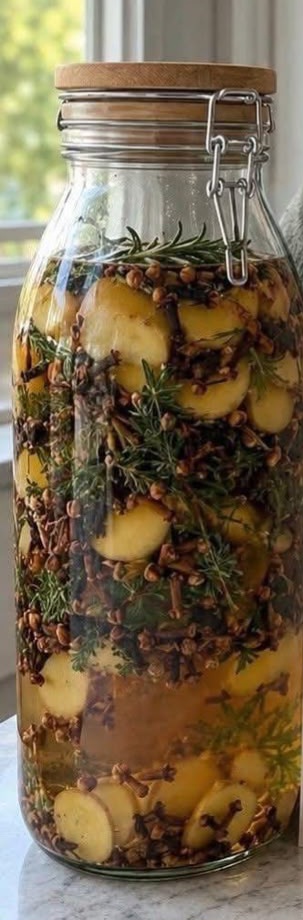
Looking at the jar, you can see several layers of simple, whole ingredients:
Garlic: Rich in sulfur compounds, including allicin, which forms when garlic is crushed or sliced. Garlic has been studied for its potential to support heart and metabolic health as part of a balanced diet.
Sliced root, likely ginger or potato style base: In this type of recipe, the light colored slices are often fresh ginger or sometimes preserved lemon or apple. Ginger is traditionally used to support digestion and reduce occasional nausea.
Oregano and rosemary: Aromatic herbs rich in polyphenols and essential oils such as carvacrol and rosmarinic acid. They are used for flavor and for their antioxidant properties.
Cinnamon sticks and cloves: Warm spices that add flavor and contain compounds like cinnamaldehyde and eugenol. They are commonly used in small amounts to support palatability and may help with the sensory satisfaction of a meal.
A vinegar or lightly fermented brine: The liquid appears to be an oil and vinegar style infusion. Acidic preservation helps keep the mixture stable and adds tangy flavor.
Together, these ingredients create a strongly flavored, aromatic condiment, not a medicine.
Potential Wellness Support, Explained Carefully
It is important to separate traditional use from proven treatment. No food mixture cures cancer, clears parasites on its own, reverses fatty liver, or replaces medication for hypertension, arthritis, menopause, or obesity.
What research does suggest, when these foods are part of an overall healthy diet:
Digestive support: Ginger, oregano, and garlic are often used to make meals more digestible and to reduce occasional bloating when used in culinary amounts.
Antioxidant diversity: Combining herbs and spices increases the variety of polyphenols in the diet, which help combat oxidative stress as part of a diet rich in fruits and vegetables.
Flavor without excess salt or sugar: An infused condiment can help you enjoy vegetables, legumes, and whole grains with less added salt.
Microbiome friendly habits: Diets rich in diverse plant foods, including garlic and herbs, are associated with a more diverse gut microbiota.
For fatty liver, high blood pressure, arthritis, and weight management, the most effective approaches remain a balanced eating pattern, regular physical activity, adequate sleep, limiting alcohol, and following your clinician’s plan. A condiment can be a part of that pattern, but not a substitute.
Traditional Recipe: How to Make a Small Batch Safely at Home
This recipe makes one large 1 liter jar for home use. Always use clean equipment and fresh ingredients.
Ingredients:
2 to 3 whole heads of garlic, peeled and lightly crushed
2 cups of sliced fresh ginger, washed well, or a mix of ginger and lemon slices
3 tablespoons dried oregano
2 tablespoons fresh rosemary or 1 tablespoon dried
2 cinnamon sticks, broken into pieces
1 tablespoon whole cloves
1 tablespoon black peppercorns, optional
2 cups apple cider vinegar with 5 percent acidity
1 cup extra virgin olive oil
1 teaspoon sea salt
Equipment: One 1 liter glass jar with a clamp lid, sterilized with hot water.
Method:
Step 1: Prepare the jar. Wash the jar and lid with hot soapy water, rinse well, then sterilize with boiling water. Let it air dry.
Step 2: Layer the dry ingredients. Place half the garlic at the bottom, then add a layer of ginger slices, a sprinkle of oregano, rosemary, a few cloves, and a piece of cinnamon. Repeat until the jar is almost full but not packed too tightly.
Step 3: Add the liquids. Mix the apple cider vinegar with the salt until dissolved. Pour it over the ingredients until they are two thirds covered. Then top up with olive oil, leaving about 1 inch of headspace. The oil helps limit air exposure.
Step 4: Remove air bubbles. Use a clean chopstick to gently press and release trapped air. Make sure all solid pieces are submerged.
Step 5: Seal and rest. Close the jar and store it in the refrigerator. Let it infuse for at least 48 hours before tasting. The flavor develops more after 5 to 7 days.
Step 6: Storage. Keep refrigerated at all times. Use a clean, dry spoon each time. Use within 3 to 4 weeks. Discard if you see mold, cloudy slime, bubbling when it has been refrigerated, or an off smell.
This is a refrigerated infused condiment, not a shelf stable canned product. True canning for room temperature storage requires tested procedures that this home method does not provide.
How People Commonly Use It
This mixture is very concentrated, so a small amount is enough:
1 to 2 small slices of the infused ginger or garlic with a teaspoon of the herbed oil as a topping for cooked vegetables, beans, or salads
Mixed into salad dressings or marinades
As a flavorful addition to soups and stews after cooking, not as a main dish
Start with a small taste to check tolerance. Garlic, cloves, and cinnamon can be strong and may cause heartburn or stomach discomfort in sensitive individuals.
Safety and Who Should Be Careful
Even though these are common foods, consider these points:
Garlic and blood clotting: Large amounts of garlic and high dose garlic supplements may interact with blood thinning medications. If you take anticoagulants, antiplatelet drugs, or have a bleeding disorder, ask your clinician before using concentrated garlic preparations regularly.
Blood pressure and blood sugar medications: Cinnamon and garlic are foods, but concentrated use should be discussed if you take medication for hypertension or diabetes, because overall diet changes can affect readings.
Stomach sensitivity: People with acid reflux, gastritis, or irritable bowel may find vinegar, garlic, and strong spices irritating.
Pregnancy and menopause: Culinary amounts of these herbs are generally used as spices, but concentrated medicinal doses are not recommended without professional guidance.
Allergies: Check for allergies to any of the ingredients.
Never attempt to self treat parasites, cancer, or liver conditions with home jars. Those conditions require prompt medical evaluation.
Building a More Supportive Daily Pattern
If your goal is to support liver health, metabolic health, or joint comfort, focus on proven habits:
Eat more vegetables, fruits, legumes, whole grains, nuts, and olive oil
Limit added sugars, sugary drinks, fried foods, and excess alcohol
Maintain a healthy weight through sustainable habits
Move regularly with both aerobic and strength activities
Get adequate sleep and manage stress
A flavorful infused jar can make healthy meals more enjoyable, which helps you stick to these habits.
Conclusion
The garlic, oregano, and cinnamon jar you see in traditional kitchens is best understood as a flavorful, aromatic condiment made from common culinary plants. It can add variety, aroma, and antioxidant diversity to meals when used in small amounts and stored safely in the refrigerator.
It is not a secret cure and does not replace medical care. Used sensibly as part of a balanced diet, it can be a pleasant way to enjoy more plant foods and support everyday digestive comfort.
If you try it at home, keep your batch small, keep it cold, use clean utensils, and pay attention to how your body feels.