Introduction
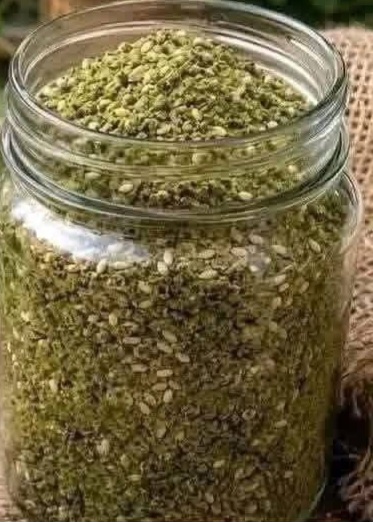
The photo shows a glass jar filled with a green, coarse herb and seed mix, with a wooden spoon beside it. This looks like zaatar, a traditional Middle Eastern and North African blend usually made from dried thyme or oregano, toasted sesame seeds, sumac, and salt.
Posts online sometimes claim this mix is full of collagen and that one tablespoon per day for three months will make no one guess your age. That is not accurate. Collagen is an animal protein found in skin, bones, and connective tissue. Plant herb mixes do not contain collagen.
What zaatar does offer is flavor, aroma, and small amounts of plant nutrients that can make healthy meals more enjoyable. This article explains what is inside, how to use it, and realistic ways to support skin health.
This information is educational only and is not medical advice.
What Is in Zaatar
A typical homemade zaatar includes:
Dried thyme, oregano, or marjoram: Provide aroma from essential oils like thymol and carvacrol, plus polyphenols
Toasted sesame seeds: Provide unsaturated fats, some protein, calcium, and a nutty crunch, visible as the light seeds in your photo
Sumac: Adds tangy, lemony flavor and deep color
Salt: Used in small amounts for taste
Recipes vary by region. Some versions add cumin or coriander.
Nutrition in 1 Tablespoon
About 1 tablespoon, roughly 7-8 grams, provides approximately:
Small amount of fiber from herbs and sesame
Healthy unsaturated fats from sesame seeds
Small amounts of calcium, iron, and magnesium
Antioxidant polyphenols from herbs and sumac
It is flavorful, so a little goes a long way. It does not provide collagen, and it does not reverse aging.
How to Use Zaatar in the Kitchen
Zaatar is best as a seasoning, not a supplement:
Mix 2 tablespoons zaatar with 1/4 cup extra virgin olive oil as a dip for whole grain bread
Sprinkle over labneh, hummus, eggs, or yogurt
Season roasted vegetables, chicken, or fish before baking
Toss with popcorn or roasted chickpeas for a savory snack
Add to salads with lemon and olive oil
Start with 1 teaspoon per serving for taste. There is no need to eat a tablespoon of dry mix every day for months.
What Actually Supports Skin Health
Healthy skin is supported over time by overall habits, not one powder:
Adequate protein from varied sources, such as legumes, fish, eggs, dairy or soy, nuts and seeds. Your body uses amino acids from protein to make its own collagen
Vitamin C from fruits and vegetables, which is needed for normal collagen formation
Enough water, sleep, and sun protection
Avoiding smoking and limiting excess alcohol and added sugars
If you are interested in collagen peptides as a supplement, discuss it with your clinician. They are different from herb mixes.
Storage and Safety
Store in a clean, airtight glass jar like the one in the photo, away from heat and light
Use a dry spoon. Moisture can cause clumping and spoilage
Homemade blends are best used within 3 to 6 months for fresh aroma
Sesame is a common allergen. If you have sesame allergy, avoid zaatar with sesame
If you have high blood pressure or need to limit sodium, choose or make a low-salt version
Buy herbs and sesame from a trusted source to reduce risk of contamination
Discard if it smells musty, tastes stale, or shows moisture or mold.
Conclusion
The jar in your photo shows zaatar, a tasty herb and sesame blend that is wonderful for seasoning everyday foods. It adds flavor that can help you enjoy more vegetables, legumes, and whole grains.
It is not full of collagen, and no spoonful will make your age unguessable. Enjoy it for what it is: a fragrant, versatile kitchen staple that supports a varied, balanced diet when used in normal culinary amounts.