Introduction
Celery is a crisp, green vegetable that is often used in soups, salads, and juices. In recent years, a glass of fresh celery juice has become a popular morning drink because it is light, hydrating, and easy to make with just one main ingredient.
Photos online sometimes claim that celery cleanses the blood, skin, kidneys, liver, and pancreas in one shot. No single food or drink can do that. Your liver and kidneys naturally filter and clean your body every day. What celery can offer is hydration, some fiber when eaten whole, vitamins, minerals, and a low calorie way to add more vegetables to your diet.
This article explains what celery actually provides, how to make a simple celery juice like the one in your photo, and how to enjoy it safely.
This information is educational only and is not medical advice.
What Celery Contains
Celery stalks are about 95 percent water, which makes them very hydrating.
Per cup of chopped celery, about 100 grams, you get:
Water and fiber: When eaten whole, celery provides insoluble and soluble fiber that supports regular bowel movements. When juiced, most insoluble fiber is removed but some soluble fiber remains.
Vitamin K: Important for normal blood clotting and bone health.
Potassium: Helps with fluid balance and muscle function.
Antioxidants: Including apigenin, luteolin, and other polyphenols found in many green vegetables.
Natural nitrates: Like other vegetables, celery contains nitrates that are part of normal plant metabolism.
It is naturally low in sugar, low in sodium, and very low in calories.
How to Make Celery Juice Like in the Photo
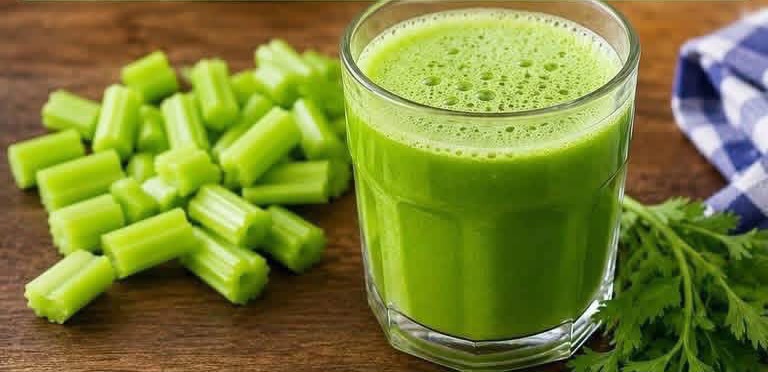
The image shows a bunch of fresh celery on a cutting board, cut pieces, and a glass of bright green juice. Here is the simple home method.
Makes 2 small glasses, about 400 ml total
Ingredients:
1 large bunch of fresh celery, about 8 to 10 stalks, washed very well
1/2 cup cold water, optional to help blending
Optional: 1/2 small green apple or a squeeze of lemon for taste, and a few ice cubes
Method:
Step 1: Wash thoroughly. Celery can hold dirt between stalks. Separate stalks, wash under running water, and trim the base and any bruised leaves.
Step 2: Chop. Cut stalks into 1 inch pieces like the small pile in the bottom left of your photo. This helps your blender.
Step 3: Blend. Add chopped celery and 1/2 cup water to a blender. Blend on high for 60 seconds until smooth.
Step 4: Strain if you want juice. For a clearer juice, pour through a fine sieve or cheesecloth into a bowl, pressing gently. If you prefer more fiber, skip straining and drink it as a light smoothie.
Step 5: Serve fresh. Pour into a glass like the one in the photo. Drink soon after making. Add lemon if desired.
Storage: Fresh celery juice is best consumed immediately. If you need to store it, keep in a clean sealed bottle in the refrigerator and use within 24 hours. Discard if it smells sour or fizzy.
How to Use It in a Healthy Routine
Think of celery juice as a hydrating vegetable drink, not a detox cure.
Morning hydration: 1 glass, about 200 to 250 ml, can be a refreshing start before breakfast.
Pair it: If you want it to keep you satisfied longer, have it with a balanced breakfast that includes protein, such as eggs, yogurt, or beans, plus whole grains.
Keep eating whole vegetables: Do not replace all vegetables with juice. Whole celery and other vegetables provide more fiber.
For skin, kidney, liver, and pancreas health, the most important habits are drinking enough water, eating a varied diet rich in vegetables and fruits, limiting excess salt, added sugar, and alcohol, staying active, getting enough sleep, and managing conditions like high blood pressure and diabetes with your doctor.
Safety and Who Should Be Careful
Celery in food amounts is safe for most people, but consider:
Allergy: Celery allergy exists and can be serious for some people. If you have allergy to birch pollen, mugwort, or other Apiaceae family plants like carrot and parsley, be cautious.
Kidney disease or fluid and potassium limits: If your doctor has told you to limit fluids or potassium, ask how much celery juice is appropriate for you.
Blood pressure and blood thinning medications: Celery contains vitamin K and natural compounds. Culinary amounts are usually fine, but if you take anticoagulants or have low blood pressure, talk to your clinician about regular large amounts of juice.
Stomach sensitivity: Some people find raw celery juice causes bloating or gas. Start with a small glass, about 120 ml.
Pesticide residues: Wash well. Buying from a trusted source and washing thoroughly helps reduce residues.
Celery juice does not cleanse the blood or treat liver or pancreas diseases. If you have swelling, changes in urination, yellowing of skin, persistent abdominal pain, or other concerning symptoms, seek medical care.
Tips to Get More Benefits From Celery
Use the leaves as well. They are flavorful and nutritious for soups and salads.
Combine celery with other vegetables rather than drinking only celery every day.
Keep your overall diet colorful with leafy greens, other vegetables, fruits, legumes, nuts, olive oil, and adequate protein.
Conclusion
The green drink in your photo is a simple celery juice made from fresh stalks, cut and blended into a bright, refreshing beverage. It is a good way to add hydration and some vegetable nutrients to your day.
It is not a one shot cleanser for blood, skin, kidneys, liver, and pancreas. Real support for those organs comes from consistent daily habits: water, balanced eating, movement, sleep, and medical care when needed.
Make a small fresh batch, enjoy it cold, and use it as part of a varied, plant rich diet.